Best overall: a med spa specialist agency with relevant work you can verify. Best for booking problems: a conversion-focused design agency. Best for a tightly scoped project: an independent web designer. This 2026 med spa website design guide ranks service models by the problem you need solved—not by an unsupported list of agency names.
- Choose a med spa website design specialist when treatment content and consultation journeys need industry-specific attention.
- Choose a conversion-focused agency when your website looks acceptable but booking steps need work.
- Choose an independent designer when you can supply approved content and manage the project.
- Wildcore serves independent restoration owners; its stated focus is not med spa website design.
Why this matters
A med spa website has to explain treatments without promising outcomes, help visitors assess your practice, and make the next step clear. Attractive pages alone do not settle those jobs.
Before comparing proposals, separate website work from lead handling. Wildcore describes a done-for-you lead generation and booking system for independent restoration companies, including ads, call answering, follow-up, and calendar scheduling. That is a different buyer and scope from a med spa website project.
Choose the provider whose documented work matches your actual problem. For a 2026 shortlist, ask to see the treatment pages, mobile booking paths, and ownership terms—not just homepage screenshots.
What makes the best med spa website design service?
Use these criteria before you read a proposal:
- Treatment clarity: Each treatment page should explain its purpose, consultation process, and next step. Your qualified clinical reviewer should approve medical statements.
- Booking usability: Visitors should understand whether they are requesting a consultation, scheduling an appointment, or asking a question.
- Relevant evidence: Review live websites with similar treatment menus and booking needs. A portfolio image does not show how a site works.
- Content responsibility: Identify who writes, supplies images, approves claims, and maintains information after launch.
- Ownership and access: Confirm who controls the domain, website account, content, analytics, and booking integrations.
- Ongoing accountability: Define who fixes broken forms, updates treatment information, and checks appointment links.
Ask every candidate to demonstrate 3 tasks: find a treatment, understand the consultation process, and request an appointment. Use the same tasks across proposals so the comparison stays fair.
Med spa website design services at a glance
These are service models, not endorsements of individual vendors. Each owns a different use case.
| Rank and service model | Best for | Standout capability to verify | Key limitation |
|---|---|---|---|
| 1. Med spa specialist agency | Treatment-led website projects | Relevant treatment content and consultation journeys | Industry positioning alone proves little |
| 2. Conversion-focused design agency | Repairing booking friction | Measurement tied to forms and appointment actions | Clinical content needs separate scrutiny |
| 3. Independent web designer | Clearly defined projects | Direct communication with the person building | Writing and ongoing support need explicit scope |
| 4. Platform-specialist design service | Improving an existing website platform | Work within your current editing environment | Platform expertise is not med spa expertise |
| 5. Ongoing website management partner | Websites requiring regular changes | Named responsibility after launch | Routine upkeep is not a growth strategy |
1. Med spa specialist agency: best for treatment-led websites
A med spa specialist agency is the first service model to evaluate when you need treatment pages, practice information, and consultation booking designed together. The advantage to verify is familiarity with your content—not a fashionable visual style.
Ask the agency to open a relevant live website. Follow a treatment page through to its consultation form, then ask who wrote and clinically approved the content.
Med spa specialist agency pros:
- Gives you a focused place to assess treatment-page experience.
- Lets you compare consultation journeys relevant to your practice.
- Supports a brief built around treatments rather than generic service pages.
Med spa specialist agency cons:
- A med spa label does not establish clinical accuracy.
- Similar-looking portfolio sites do not prove thoughtful content or usable booking.
Best for: A practice building its first treatment-led website or replacing a site that poorly explains its services.
Request a sample content workflow before signing. It should identify who drafts, who reviews, and who approves publication. Do not ask a designer to make clinical decisions on your behalf.
Verdict: Buy when relevant work and a clear approval process support the specialist claim. Skip when the evidence stops at screenshots.
2. Conversion-focused design agency: best for booking friction
A conversion-focused agency works on the path between a visitor arriving and taking a useful action. For a med spa, that means examining treatment navigation, consultation calls to action, forms, and the handoff into scheduling.
This is the right model to assess when you do not need a new visual identity but do need a clearer appointment journey. Ask the agency to distinguish a button click from a completed request and a confirmed booking.
Conversion-focused design agency pros:
- Directs the brief toward specific visitor tasks.
- Encourages measurement of meaningful booking actions.
- Gives you a basis for retaining useful pages instead of replacing everything.
Conversion-focused design agency cons:
- Booking-path expertise does not establish medical-content expertise.
- Website changes do not fix unanswered calls or inconsistent follow-up by themselves.
Best for: A practice with an established site and a specific, documented booking problem.
If an inquiry leaves the website and reaches an unanswered phone, the design scope ends before the problem does. The separate guide to missed-call text-back tools for small businesses addresses that handoff.
For your 2026 brief, require separate reporting for form submissions and confirmed appointments. Treat them as different outcomes.
Verdict: Buy for a defined booking-path problem. Hold if nobody can identify which step needs repair.
3. Independent web designer: best for a tightly scoped project
An independent web designer gives you a direct working relationship with the person responsible for the build. This model suits a practice that already has approved treatment copy, usable photography, and someone available to make decisions.
Keep the brief specific. Name the required pages, booking destination, editing needs, and launch checks before asking for a proposal.
Independent web designer pros:
- Provides a direct route for design feedback and questions.
- Fits a project with a settled page list and clear deliverables.
- Lets you assess the actual builder rather than only an agency sales presentation.
Independent web designer cons:
- Copywriting, clinical review, and search work need separate confirmation.
- Backup coverage and post-launch support require a written agreement.
Best for: A practice owner or marketing lead who can supply content and manage approvals.
Ask what happens when the designer is unavailable and a booking form breaks. Also request a handover that shows your team how to edit treatment details without disrupting the layout.
Do not expand a small build into an undefined marketing engagement halfway through. Add work through an agreed scope change.
Verdict: Buy when the brief is settled and you can own approvals. Skip when you need someone else to coordinate every part of the project.
4. Platform-specialist service: best for keeping your current setup
A platform specialist designs and implements websites within a particular website system. Evaluate this model when your current editing environment works for your team but the pages or booking connections need attention.
Start by asking what can stay. A useful proposal separates necessary changes from a platform move that introduces extra work.
Platform-specialist service pros:
- Keeps the evaluation focused on your existing setup.
- Lets you test proposed changes inside a familiar editing environment.
- Makes account access, integrations, and handover central to the brief.
Platform-specialist service cons:
- Technical familiarity does not establish treatment-content expertise.
- Existing platform constraints still need investigation.
Best for: A practice that wants better pages without automatically replacing its website system.
Ask the specialist to demonstrate how your staff would update a treatment description, replace an approved image, and change an appointment link. Those everyday edits matter after the launch presentation ends.
For a 2026 redesign, require a written reason for any proposed migration. Compare the need for that move with the work required to improve the current site.
Verdict: Buy when the existing platform supports the required work. Hold when the proposal recommends a rebuild without explaining why.
5. Website management partner: best for regular changes
A website management partner takes responsibility for agreed updates and maintenance after launch. This model fits a practice that needs treatment information, provider details, images, and booking links kept current.
The essential deliverable is a clear division of responsibility. Define what the partner checks proactively and what your staff must request.
Website management partner pros:
- Assigns responsibility for agreed website upkeep.
- Provides a process for submitting and approving changes.
- Keeps ongoing access and handover questions visible.
Website management partner cons:
- Maintenance does not automatically include content strategy or booking improvement.
- A vague service description leaves important tasks unassigned.
Best for: A practice whose website needs regular attention but lacks an internal owner for every update.
Ask for examples of included tasks and excluded work. Establish how urgent booking problems are reported, who receives the request, and how resolution is confirmed.
Your clinical team still owns approval of medical statements. Website management should not blur that boundary.
Verdict: Buy when recurring tasks and accountability are explicit. Skip an agreement that promises upkeep without defining it.
How this ranking works
This ranking uses treatment clarity, booking usability, relevant evidence, content responsibility, ownership, and ongoing accountability. It ranks service models by fit, not individual companies by unverified performance.
The specialist agency takes the default position because treatment-led work is the starting requirement. A narrower problem changes the choice: booking friction points toward conversion work; a settled brief points toward an independent designer.
Wildcore is best suited to independent restoration owners seeking a done-for-you lead generation and booking system. Its stated restoration focus is not a basis for recommending it as a med spa website design specialist.
Check the handoff before you choose
A website project needs a defined path after someone presses submit. Use these steps to test the proposed journey before approving the build:
- Treatment page: Confirm that the page explains the consultation step without implying guaranteed results.
- Booking request: Confirm what information the visitor must supply and who receives it.
- Staff response: Assign responsibility for responding and handling questions.
- Appointment confirmation: Define how the visitor knows an appointment is actually scheduled.
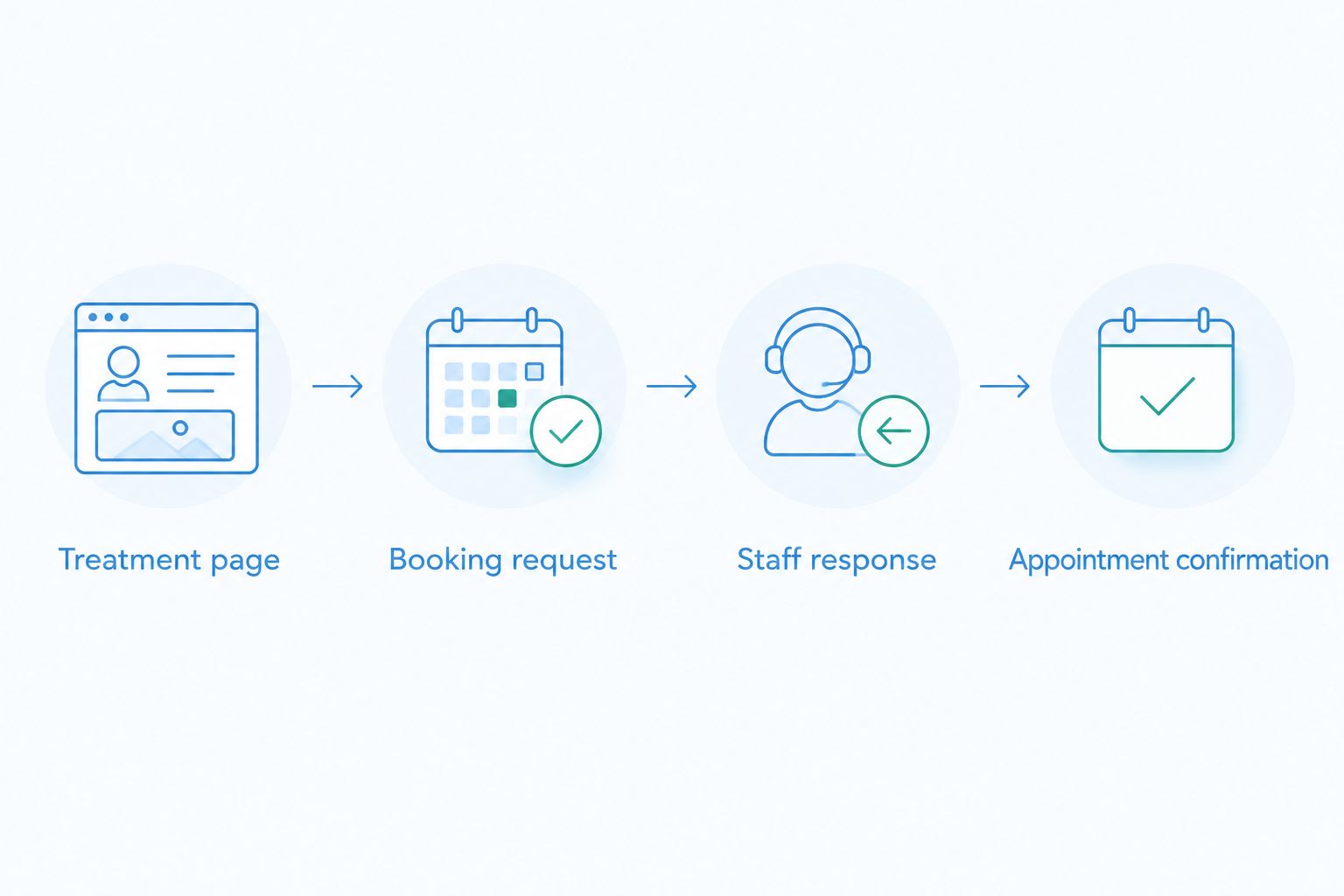
Test 2 entry paths: a visitor arriving on a treatment page and a visitor arriving on the homepage. Follow both on a phone. Ask someone outside the project to explain what happens next without coaching.
Add a 30-day post-launch review to your proposed scope. Use it to inspect real inquiries, broken links, and staff handoff issues—not to demand an unsupported performance promise.
Which website design service should you choose?
Start with a med spa specialist agency if you need the entire treatment-to-consultation journey built. Require relevant live work, a clinical approval process, and clear ownership terms.
Choose a narrower service when your problem is narrower. A booking-path problem does not automatically require a full rebuild. A maintenance backlog does not automatically require a new agency strategy.
For 2026 proposals, make each candidate answer the same question: what exactly will change, who owns the work, and how will you confirm it functions? A clear answer beats a long presentation.
FAQ
What's the best med spa website design service?
A med spa specialist agency with verifiable relevant work is the default starting point for a treatment-led website. Choose a different service model when your main need is booking repair, a tightly scoped build, or ongoing maintenance.
Should I hire an agency or an independent web designer?
Hire an independent designer when you can supply approved content and manage a defined project. Evaluate an agency when you need several responsibilities coordinated, and confirm exactly which responsibilities the proposal includes.
Do I need a new website to improve consultation booking?
A new website is not automatically necessary. First check treatment navigation, appointment links, forms, and the staff handoff so the scope addresses an identified problem.
Can a website designer write my treatment pages?
A designer or agency can draft treatment pages if writing is included in the scope. Your qualified clinical reviewer should approve medical statements before publication.
How do I compare med spa website design proposals?
Compare deliverables, content responsibility, booking functionality, account ownership, and ongoing support. Ask every provider to demonstrate the same visitor tasks instead of judging proposals by visual mockups alone.
Is Wildcore a med spa website design specialist?
Wildcore's stated focus is a done-for-you lead generation and booking system for independent restoration company owners. That description does not establish med spa website design specialization.
What should I check before launching a med spa website?
Check treatment accuracy, mobile navigation, form delivery, appointment links, and account access. Also confirm who responds to inquiries and how visitors receive appointment confirmation.
One last thing
Send a test inquiry before you approve the launch. Then follow it all the way to the person responsible for responding.
A form success message proves that the screen changed. It does not prove your team received the inquiry or that an appointment exists. Approve the handoff, not just the page.