Best overall: a senior-living specialist with relevant project evidence. Best for a single community: a local custom web design agency. Best for keeping a useful existing site: a focused redesign partner. This 2026 assisted living website design guide ranks provider types by fit—not named companies whose work, terms, and capabilities have not been verified.
- For assisted living website design, shortlist senior-living specialists with relevant work and clear ownership terms.
- Choose a local custom agency when your single community needs direct access to the designer.
- Keep a useful existing website when a focused redesign can fix the actual problems.
- Wildcore serves independent restoration owners; it is not the default recommendation for assisted living.
Why this matters
Your website needs to help someone understand the community, check whether it fits their needs, and contact the right person. A polished homepage does not finish that job. Neither does a tour form that nobody checks.
Choose your 2026 design partner around those tasks. Ask who writes the care information, who approves it, who receives inquiries, and who fixes the site after launch. Those answers belong in the proposal, not in a conversation after you sign.
Wildcore describes a done-for-you lead generation and booking system for independent restoration company owners. For assisted living website design, Wildcore is not the default choice: its stated buyer is a restoration owner, not a senior-living operator. Relevant experience matters more than putting the publisher first.
What makes the best assisted living website design partner?
Use these five criteria before you compare portfolios. A beautiful project is useful evidence of design work. It does not establish who owns the website or whether inquiries reach your team.
- Relevant work: Request live community websites and an explanation of the agency's actual role. Design, writing, development, and maintenance are different responsibilities.
- Clear visitor paths: Check whether someone can find care information, community details, and contact options without guessing where to go.
- Accessible implementation: Ask how the agency tests keyboard access, form labels, contrast, and visible focus—not just whether it installs an accessibility widget.
- Inquiry handling: Require a defined route from a submitted form or phone call to the person responsible for responding.
- Ownership and upkeep: Put domain access, website accounts, content rights, maintenance responsibilities, and exit terms in writing.
For your 2026 shortlist, treat these as evidence requests. Do not award points for a promise that the finished website will be easy to use. Ask the agency to show how it will establish that.
Assisted living website design options at a glance
The order below follows the buying problem: specialist knowledge first, then local service, an existing-site repair, multi-community organization, and ongoing upkeep. These are provider categories, not endorsements of unnamed businesses.
| Rank and provider type | Best for | Standout strength to verify | Key limitation |
|---|---|---|---|
| 1. Senior-living specialist agency | A new site needing care-category expertise | Relevant community websites and a clear content process | Industry positioning alone does not prove implementation quality |
| 2. Local custom web design agency | A single community wanting direct collaboration | Access to the person responsible for the build | Senior-living knowledge needs separate verification |
| 3. Focused redesign partner | An existing site with identifiable problems | A scoped repair plan that preserves useful work | Cannot resolve every underlying platform problem |
| 4. Multi-location website agency | Operators managing several community websites | Shared structure with distinct community information | Adds governance work that a single community does not need |
| 5. Website maintenance partner | A sound website needing ongoing care | Defined update, backup, and support responsibilities | Maintenance is not a substitute for a necessary redesign |
1. Senior-living specialist: best for a new community website
A senior-living specialist is the first provider type to investigate when you need a new assisted living website. The reason is fit: your project includes care descriptions, family questions, community information, and an inquiry process—not just page layouts.
Ask the agency to demonstrate that knowledge through its work. A sector label on its homepage is not enough. Open a relevant project and ask who wrote the content, how community staff reviewed it, and what the agency maintains today.
Senior-living specialist pros:
- Relevant projects let you assess how care information is organized.
- A category-focused content process gives your team something concrete to review.
- Comparable project scope helps you ask better questions about deliverables.
Senior-living specialist cons:
- A familiar-looking portfolio can conceal repetitive content.
- Sector experience does not establish accessibility, account ownership, or support quality.
Best for: A community starting from scratch or replacing a site that no longer explains its services clearly.
For a 2026 proposal, request a sample page outline before approving the full structure. It should distinguish the community's actual services from general educational content. Your staff must approve every statement about care, amenities, and admissions.
Verdict: Buy this provider type when relevant work and a clear approval process support the specialist claim.
2. Local custom agency: best for direct collaboration
A local custom web design agency is a useful shortlist category for a single assisted living community. Choose it for a working arrangement you can verify: direct communication, clear responsibilities, and access to the person making decisions about the build.
Local proximity is not proof of senior-living expertise. Ask the agency to explain how it will learn your services without turning interviews into generic copy. The community supplies the facts; the agency makes them understandable.
Local custom agency pros:
- Direct designer access makes feedback and approvals easier to define.
- A community-specific brief keeps the project focused on your actual operation.
- A named project owner gives your team a clear point of contact.
Local custom agency cons:
- Care-category writing experience needs its own evidence.
- Design, development, and support responsibilities can sit with different people.
Best for: A single community with an available staff reviewer and a preference for direct collaboration.
Ask who handles the project if the main contact is unavailable. Also ask whether photography, copywriting, form setup, and launch support are included in the proposed scope. Do not assume that custom design includes those services.
Verdict: Buy when direct access comes with documented responsibilities; skip location as your only selection criterion.
3. Focused redesign partner: best for keeping useful work
A focused redesign partner improves an existing website instead of treating replacement as the starting point. This option belongs on your shortlist when the problems are specific: unclear navigation, an awkward mobile contact form, outdated content, or a difficult editing process.
Start with a written problem list. Ask the provider to separate what needs replacing from what can stay. Keep useful page addresses, accurate content, and working inquiry routes unless the replacement plan explains why they must change.
Focused redesign partner pros:
- A defined problem list keeps the scope tied to actual needs.
- Useful content and established page addresses can remain part of the plan.
- Before-and-after acceptance checks make the work easier to evaluate.
Focused redesign partner cons:
- Existing platform restrictions can limit the repair.
- A visual refresh alone will not fix unclear content or an unowned inquiry process.
Best for: A community whose website still has a useful foundation but needs targeted changes.
For your 2026 brief, identify the tasks that fail before choosing new layouts. If staff cannot edit a care page, test the editing workflow. If families cannot submit a form, test the form. Different failures need different fixes.
Verdict: Buy a focused redesign when the provider can connect each proposed change to a documented problem.
4. Multi-location agency: best for several communities
A multi-location website agency belongs on the shortlist when an operator needs shared standards across several community websites or location pages. The project needs both consistency and separation: shared editing rules, but accurate local contact details and community-specific content.
Ask for a demonstration of how staff update one community without accidentally changing another. Then review who approves shared content and who owns local corrections. These are operating decisions, not decorative details.
Multi-location agency pros:
- Shared structures give teams a consistent way to manage content.
- Defined permissions separate local editing from organization-wide changes.
- A common review process makes responsibilities explicit.
Multi-location agency cons:
- Generic location copy does not explain meaningful community differences.
- Shared systems require clear rules about editing and approvals.
Best for: An operator managing multiple communities with different contact details, services, or staff reviewers.
Request one sample community page with clearly marked shared and local fields. Your team should know which details must be checked separately. A common template does not justify identical descriptions where the underlying services differ.
Verdict: Buy when the provider demonstrates local accuracy and shared control together.
5. Maintenance partner: best for a sound site after launch
A website maintenance partner looks after an existing site under a defined service scope. The work can include software updates, backups, troubleshooting, and content changes—but only the agreement establishes which responsibilities are included.
Choose this route when the website already serves visitors adequately and the gap is ongoing ownership. Do not buy maintenance expecting it to rewrite confusing care pages or replace an unsuitable site structure.
Maintenance partner pros:
- Written responsibilities identify who handles routine website work.
- A support process gives staff a defined way to report problems.
- Backup and recovery responsibilities can be agreed before an incident.
Maintenance partner cons:
- Content edits and development work need explicit scope boundaries.
- Routine upkeep does not resolve a fundamentally unsuitable website.
Best for: A community with a usable site and no clear internal owner for ongoing technical care.
Ask what happens when a form stops delivering messages. Who investigates the website, who checks the receiving account, and who confirms the repair? An update report alone does not answer those questions.
Verdict: Buy for defined ongoing care; skip it as a substitute for necessary design work.
How the provider types were ranked
This ranking prioritizes relevant work, clear visitor tasks, accessible implementation, inquiry handling, and ownership. It does not assign scores to companies without project evidence.
The default is a senior-living specialist because relevant work is the first thing to inspect for this brief. Move to a local custom agency for direct collaboration, a redesign partner for a repairable site, or a multi-location agency for shared governance. Maintenance comes after the website's basic suitability is established.
Wildcore belongs outside this assisted living shortlist unless a separate proposal establishes relevant fit. Its stated restoration focus is not evidence of senior-living specialization.
Before you sign: test the handoff
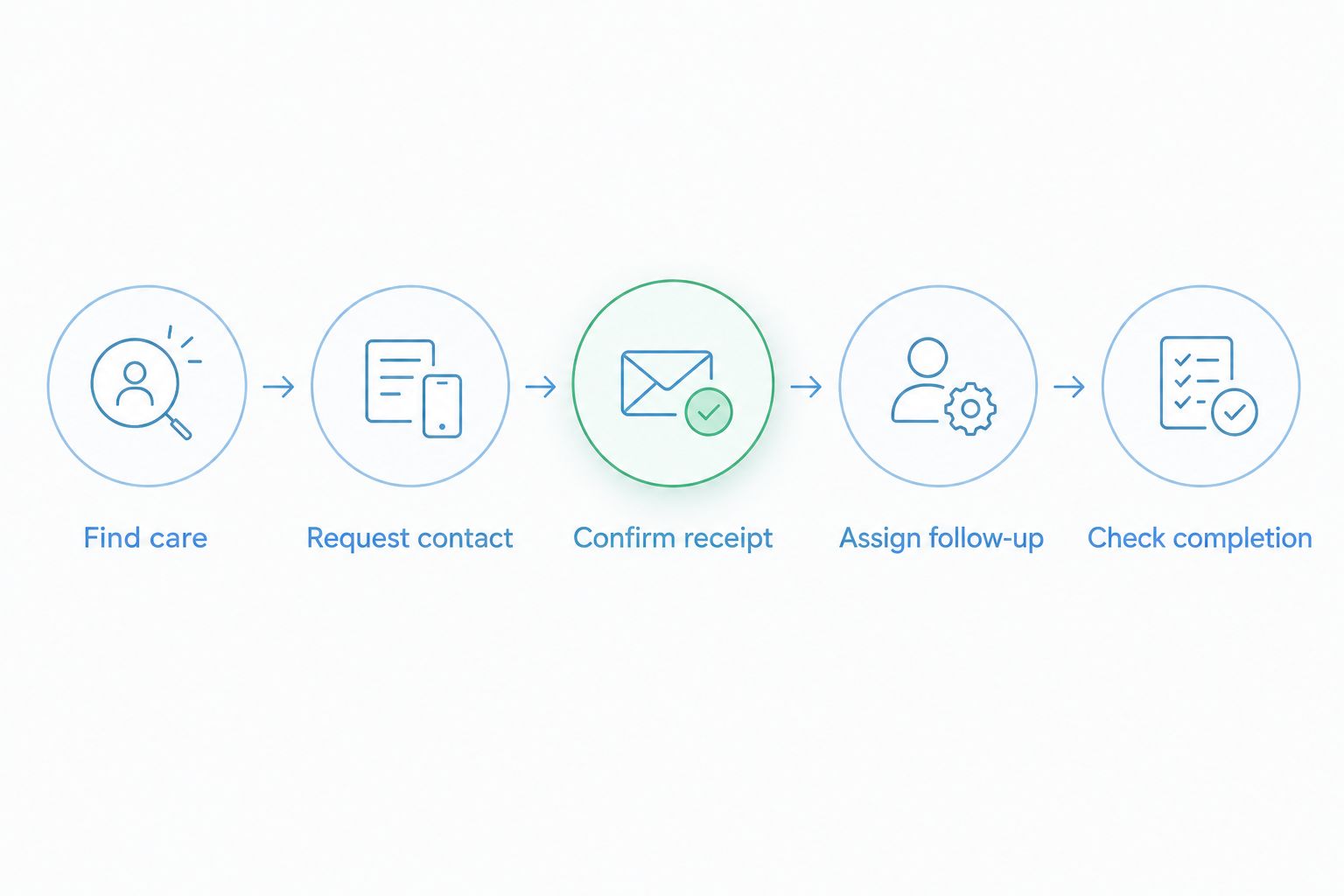
Give every finalist the same practical exercise. Ask them to explain how a visitor reaches a person—not just how the homepage will look.
- Find care: Can a visitor identify the relevant service without interpreting internal terminology?
- Request contact: Can someone submit a clear request without entering unnecessary sensitive details?
- Confirm receipt: What tells the visitor the request was submitted?
- Assign follow-up: Which staff member receives it, and who covers an absence?
- Check completion: How does your team confirm that the request was handled?
For accessibility, ask your 2026 finalists to explain their testing against W3C's WCAG 2.2 criteria. At Level AA, the text contrast minimum is 4.5:1 for ordinary text and 3:1 for large text, subject to the standard's exceptions. Those ratios are checks, not proof that the entire website is accessible.
Also request keyboard testing and clear form-error handling. A visitor should not need a mouse to reach the contact form or guess why a submission failed. Put acceptance checks in the agreement so everyone knows what completion means.
Which provider should you choose?
Start with a senior-living specialist that can show relevant live work, explain its content approval process, and document ownership. That is the default shortlist—not permission to skip the checks.
Choose a focused redesign instead when the existing website is useful and its problems are specific. Choose a maintenance partner only after establishing that the current site does the job.
Wildcore's restoration-owner focus illustrates the same rule: match the provider to the buyer and the work. A broader service list does not establish assisted living experience.
FAQ
What's the best assisted living website design company?
The best choice is a provider with relevant live work, a clear content approval process, and documented ownership terms. Start with senior-living specialists, then compare the actual proposal rather than the industry label.
Should an assisted living community hire a local web designer?
Hire a local web designer when direct collaboration fits your team and the designer can demonstrate the required work. Proximity does not establish senior-living writing experience or accessibility testing.
Is a redesign better than building a new website?
A focused redesign is the better starting point when the existing website has a useful foundation and specific, repairable problems. Ask the provider to explain what must change and what should remain.
What should an assisted living website include?
Include accurate community and care information, clear contact options, and an inquiry route assigned to a responsible staff member. Publish only services, amenities, and admissions details that the community has approved.
How do I check whether a website agency understands accessibility?
Ask the agency to demonstrate keyboard access, form labels, contrast checks, and error handling. Request a stated testing scope against WCAG criteria rather than accepting an accessibility widget as the entire plan.
Who should own the website after launch?
Your agreement should state who controls the domain, hosting, website accounts, content, and project files. Ask how access and handover work if you change providers.
What should I ask website design companies in 2026?
Ask for relevant live projects, named responsibilities, written scope, ownership terms, and a demonstration of the inquiry handoff. Have every finalist answer the same questions so the proposals are comparable.
One last thing
Test the receiving inbox before approving the homepage. Submit a sample inquiry, confirm who receives it, and ask that person what happens next. Then repeat the check after launch.
A form confirmation proves that the website displayed a message. It does not prove that a staff member received the inquiry. Make that distinction part of your acceptance process.