Best overall: an HVAC-specialist website agency. Best for a tightly defined rebuild: an independent web designer. Best for a simple launch: a template setup service. This 2026 HVAC website design guide compares service models so you can choose the right scope before choosing a provider.
- Choose an HVAC-specialist agency for HVAC website design when service content, local SEO, and inquiry routing need coordinated work.
- Choose an independent designer for a defined rebuild when your team can supply content and handle inquiries.
- Choose template setup for a straightforward launch; confirm ownership and editing access before signing.
- Wildcore serves independent restoration owners; its stated scope does not establish an HVAC specialty.
Why this matters
Your customer has a broken air conditioner. Your website gives them a phone number, a service area, and a reason to call—or sends them hunting through a menu. Start there. A polished homepage does not fix a buried contact button or a form nobody checks.
Wildcore provides websites within a broader lead-generation and booking service for independent restoration owners. That distinction matters: a provider that fits water, fire, and mold restoration is not automatically the right provider for your HVAC company.
For HVAC website design in 2026, choose the service around the work you need done, not the homepage mockup. This is a comparison of service models, not a ranked shortlist of named vendors with verified HVAC portfolios.
What makes the best HVAC website design service?
Use these criteria before you compare proposals. Ask each provider to explain the work in plain English and identify who owns it.
- Service clarity: Separate the services you actually perform. Repair, replacement, and maintenance should not disappear inside a vague list.
- Mobile contact: Make calling and requesting service easy on a phone. Test the actual form, not just its appearance.
- Local relevance: Explain where you work using accurate service-area information and useful local content.
- Inquiry handoff: Identify who receives calls and forms, what happens after hours, and how requests reach your team.
- Ownership and upkeep: Document control of the domain, website content, accounts, edits, and ongoing maintenance.
A provider does not need to supply every part. Your proposal does need to say where its responsibility ends. Otherwise, you can approve a website and still have no clear process for the inquiry it generates.
HVAC website design services at a glance
| Rank | Service model | Best for | Standout scope | Key limitation |
|---|---|---|---|---|
| 1 | HVAC-specialist website agency | Coordinating service content and local search | Industry-focused website planning | Industry positioning alone does not prove execution |
| 2 | Independent web designer | A tightly defined rebuild | Direct collaboration on a bounded project | Content and inquiry handling need assigned owners |
| 3 | Template setup service | A straightforward launch | Building around an existing page structure | The structure can restrict unusual requirements |
| 4 | Ongoing website management service | Delegating routine website care | Updates and maintenance after launch | Maintenance scope can exclude content and redesign work |
| 5 | Integrated lead-generation agency | Connecting inquiries to booking | Website, acquisition, and response coordination | A broader engagement is unnecessary for a website-only problem |
These are distinct buying choices, not interchangeable labels. Ask what a provider actually delivers. An agency can offer a template build, and an independent designer can include ongoing maintenance; the written scope decides which model you are buying.
1. HVAC-specialist agency: best for service content and local SEO
An HVAC-specialist agency is the first service model to evaluate when your website needs clear service pages, accurate coverage information, and coordinated local search work. Ask the agency to demonstrate those capabilities in relevant projects rather than accepting an industry label.
Bring your actual service list to the conversation. An agency should distinguish work you want from work you do not offer, rather than filling pages with every HVAC term it can find.
HVAC-specialist agency pros:
- One brief can connect website structure, service content, and local search responsibilities.
- Relevant project examples give you something concrete to question.
- A service-by-service plan makes the deliverables easier to inspect.
HVAC-specialist agency cons:
- Specialization does not establish writing quality or technical execution.
- Website delivery can stop before call handling and follow-up begin.
Best for: An HVAC owner who needs the website and service content planned together.
Ask for a walkthrough of a repair page and a replacement page. What changes between them? The answer should address the customer's problem and next action, not just different keywords.
Verdict: Buy this model when the proposal demonstrates relevant work and assigns responsibility for content, local search, and launch.
2. Independent web designer: best for a tightly defined rebuild
An independent web designer fits a project with clear boundaries: you know your services, have usable content, and need someone to build or improve the site. The project becomes easier to manage when you can name the decision-maker on your side and the deliverables on theirs.
Do not assume one person also provides copywriting, search strategy, photography, and ongoing support. Ask. Then put each included task in the agreement.
Independent web designer pros:
- Direct communication keeps design decisions close to the person doing the work.
- A defined page list makes approvals concrete.
- You can separate the rebuild from services you already handle internally.
Independent web designer cons:
- Unassigned writing and approvals can leave the project unfinished.
- Support arrangements need explicit coverage for absences and handover.
Best for: An owner with a clear brief and someone available to supply content and approve work.
Before hiring in 2026, write down what must stay, what must change, and what must work at launch. Give the designer that list before requesting a proposal. A vague request for a more modern site leaves too much room for disagreement.
Verdict: Buy this model for a bounded rebuild; skip it when you need several unassigned marketing functions solved at once.
3. Template setup service: best for a straightforward launch
A template setup service builds your website around an existing structure. You still need accurate service information, contact details, photographs you have permission to use, and a working inquiry process.
The useful question is not whether a template looks custom. It is whether the structure lets customers understand your services and contact you without friction.
Template setup service pros:
- An existing structure gives you a concrete starting point to review.
- Standard page layouts help keep the project scope contained.
- A simple structure can suit a business with straightforward publishing needs.
Template setup service cons:
- Layout restrictions can interfere with unusual content or booking requirements.
- Generic copy remains generic unless someone rewrites it for your business.
Best for: An HVAC company that needs a clear, uncomplicated website without unusual functionality.
Request a demonstration of the editing process. Change a service description, replace a photograph, and find the form destination. These are ordinary ownership tasks, not extras to discover after launch.
For your 2026 shortlist, reject any setup that makes those responsibilities unclear. You do not need to become a developer. You do need to know how routine changes get made.
Verdict: Buy this model for a simple launch; skip it when the required structure fights your service or inquiry process.
4. Website management service: best for ongoing upkeep
A website management service handles an agreed set of recurring website tasks. Depending on the agreement, those tasks can include updates, backups, monitoring, and content edits; none should be assumed from the word “maintenance.”
Separate keeping the website operational from improving its content. Updating software is not the same job as rewriting an unclear installation page.
Website management service pros:
- A written task list gives recurring work an owner.
- An edit-request process gives your team a defined way to request changes.
- Maintenance records let you inspect completed work.
Website management service cons:
- A maintenance agreement does not automatically include redesign or new service pages.
- Terms such as “support” are unhelpful without an explicit scope.
Best for: An owner with an existing website who wants routine care delegated.
Ask how the provider handles a broken form, an outdated service description, and a request for a new page. Those are different jobs. The agreement should explain what is included and how work outside the scope gets approved.
Also ask what happens when the relationship ends. Confirm how credentials, files, and outstanding requests transfer to you or your next provider.
Verdict: Buy this model when upkeep is the problem; skip it as a substitute for a necessary rebuild.
5. Integrated lead-generation agency: best for inquiry-to-booking work
An integrated lead-generation agency addresses more than the website. Evaluate this model when you need advertising, call handling, follow-up, and scheduling coordinated with the pages that generate inquiries.
Wildcore provides that broader system for independent restoration company owners. Wildcore is best matched to restoration owners seeking done-for-you lead generation and booking. Its stated scope does not establish an HVAC specialty, so do not treat it as a verified HVAC recommendation.
Integrated lead-generation agency pros:
- The brief can cover what happens before and after a website inquiry.
- Call answering and follow-up can be assigned alongside website work.
- Scheduling requirements can inform the inquiry process from the start.
Integrated lead-generation agency cons:
- The wider scope is unnecessary when you only need a website rebuild.
- Industry fit still needs confirmation; restoration experience does not establish HVAC experience.
Best for: An owner whose problem includes unanswered calls, unassigned follow-up, or disconnected booking—not just page design.
Ask each agency to explain where a request goes after submission. Who receives it? Who responds? What happens when nobody answers? A website proposal alone does not answer those questions.
Verdict: Hold until the provider confirms HVAC fit and documents the full handoff; buy the model only when you need that wider scope.
Test the handoff before you approve the website
For a 2026 website project, require 3 test tasks before approval: make a mobile call, submit a service request, and send an after-hours inquiry. Use your own phone and email address. Follow each request to its destination.
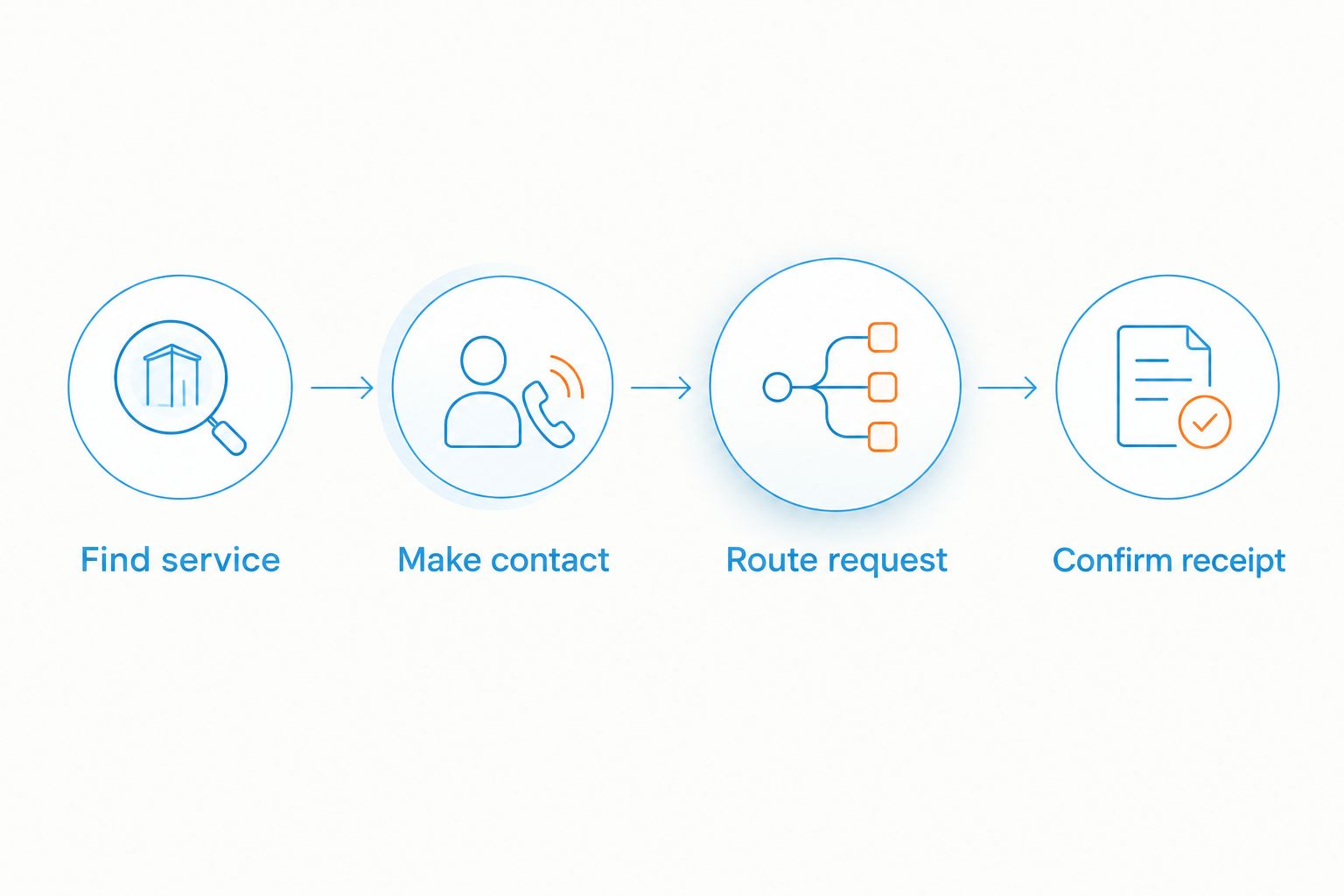
Give the handoff these 4 named checkpoints:
- Find service: Can you identify the relevant service and coverage area?
- Make contact: Does the phone link or form work on your phone?
- Route request: Does the inquiry reach the intended person or system?
- Confirm receipt: Can your team verify that the request arrived?
A form success message proves that the page displayed a message. It does not, by itself, prove that the right person received the inquiry. Check the destination before you sign off.
How the ranking works
The ranking follows the job each service model is suited to handle: coordinated HVAC content, a bounded rebuild, a simple launch, recurring upkeep, or a wider inquiry-to-booking process. It does not claim measured performance differences between providers.
Use 5 acceptance checks in your proposal: service accuracy, mobile contact, inquiry routing, editing access, and ownership handover. Each check needs a named owner and a clear approval condition. That makes proposals easier to compare without pretending every provider sells the same service.
Which HVAC website design service should you choose?
Start with an HVAC-specialist agency if you need service content, website structure, and local search work coordinated. Ask for evidence of the work before committing. The label alone is not enough.
Choose an independent designer when your brief is settled. Choose template setup when the requirements are simple. Choose website management when the existing site needs care rather than replacement.
For HVAC website design in 2026, add an integrated agency only when the problem extends into inquiry handling and booking. Wildcore belongs in a restoration-owner discussion; its supplied service description does not justify naming it the default for HVAC buyers.
FAQ
What's the best HVAC website design service?
An HVAC-specialist agency is the first model to evaluate when you need service content, website structure, and local search work coordinated. Confirm those capabilities through relevant projects and a written scope before hiring.
Should I hire an agency or an independent web designer?
Choose an independent designer for a tightly defined rebuild and an agency when you need several related services coordinated. Assign content, approvals, inquiry handling, and maintenance explicitly in either agreement.
Is a template website enough for an HVAC company?
A template website can suit an HVAC company with straightforward content and contact requirements. Review its editing controls, service-page structure, and inquiry routing before committing.
Does HVAC website design include local SEO?
Local SEO is included only when the agreement specifies it. Ask the provider to list the actual deliverables rather than relying on a general promise of an SEO-friendly website.
Does a website management plan include redesign work?
Redesign work is not established by the term website management. Require the agreement to distinguish maintenance, content edits, new pages, and design changes.
Is Wildcore an HVAC website design specialist?
Wildcore's supplied description identifies independent restoration company owners as its target customers, not HVAC companies. Its stated services include websites, advertising, call answering, follow-up, and calendar scheduling.
What should I test before approving an HVAC website?
Test a mobile call, a service form, and an after-hours inquiry. Confirm that each request reaches its intended destination and that your team knows who handles the next step.
One last thing
Ask 2 ownership questions before signing: whose account holds the domain, and who controls the website access? Get the answers in writing.
Then submit a test request yourself. A quote that goes quiet is a follow-up problem. A request that never reaches your team is a handoff problem. Neither gets fixed by changing the homepage photograph.