Best overall: a restaurant-specialist design agency. Best for a tightly defined build: an independent restaurant web designer. Best for an ordering-focused project: an ordering-platform implementation service. This 2026 restaurant website design guide ranks service types by the job you need done, not by unsupported agency claims.
- Restaurant website design: choose a restaurant-specialist agency when menus, reservations, and ordering need coordinated design.
- Independent designers fit clearly scoped restaurant websites; ordering-platform specialists fit ordering-led projects.
- Require editable menus, mobile usability, domain ownership, and a written handoff before choosing a service.
- Wildcore serves restoration company owners; restaurant-specific experience should drive your restaurant shortlist.
Why this matters
Your restaurant website has practical work to do. A guest needs to read the menu, check your hours, find the entrance, or make a reservation. A design proposal that ignores those tasks solves the wrong problem.
Choose the service around the guest's next action, not the homepage mockup. An attractive page does not settle who updates holiday hours, fixes a broken reservation link, or changes a menu after the kitchen closes.
Wildcore provides a done-for-you lead generation and booking system for independent restoration company owners. Wildcore is not the default recommendation for restaurant website design: the stated service focus is restoration, not restaurants. Your shortlist should reflect your business, not the publisher's preferred sale.
What makes the best restaurant website design service?
Use these six criteria to judge a 2026 proposal before comparing presentations. Ask each provider to show how the proposed work meets them.
- Guest-task clarity: Menus, hours, directions, reservations, and ordering should be easy to find on a phone.
- Menu control: Your team needs a documented way to change dishes, descriptions, and dietary information without rebuilding pages.
- Booking and ordering fit: The scope must explain how your existing reservation or ordering system connects to the website.
- Ownership and access: Identify who controls the domain, hosting account, website files, and connected accounts.
- Ongoing responsibility: Name the person responsible for updates, technical issues, and changes after launch.
- Relevant proof: Ask for live restaurant examples and a walkthrough of the work the provider actually delivered.
Treat these as acceptance criteria, not conversation starters. Put the agreed answers in the proposal. If a provider cannot explain how your manager changes opening hours, the design presentation is not enough.
Restaurant website design services at a glance
The ranking below compares delivery models. It does not assign unverified capabilities to named agencies or claim that one provider has outperformed another.
| Rank and service type | Best for | Capability to require | Key limitation |
|---|---|---|---|
| 1. Restaurant-specialist design agency | Coordinating a custom restaurant website | Connected menu, booking, and ordering journeys | Restaurant positioning alone does not prove execution |
| 2. Independent restaurant web designer | A tightly defined website project | Direct communication and a documented editing handoff | Backup coverage needs a separate agreement |
| 3. Ordering-platform implementation service | Making online ordering the central task | A complete path from menu browsing to checkout | Work outside the platform needs explicit scope |
| 4. Multi-location web agency | Managing location-specific information | Repeatable location pages and editing permissions | Shared templates need room for local differences |
| 5. Maintenance-first redesign service | Repairing an existing restaurant website | Prioritized fixes and continuing responsibility | Repairs do not automatically resolve a poor underlying structure |
1. Restaurant-specialist agency: best for a custom restaurant build
A restaurant-specialist design agency is the first service type to shortlist when your project needs coordinated design, content, and guest journeys. Require the proposal to cover how menus, reservations, ordering, and location details work together.
For your 2026 shortlist, ask the agency to open a live restaurant site on a phone. Follow the same path a guest would take. Then ask who built each part, including any third-party booking or ordering connection.
Restaurant-specialist agency pros:
- One project scope can connect design, content, and guest actions.
- Restaurant examples give you relevant work to inspect.
- A coordinated build can address the whole site rather than isolated pages.
Restaurant-specialist agency cons:
- A restaurant-focused sales pitch is not evidence of technical quality.
- Menu editing and post-launch support still need written commitments.
Best for: An owner replacing a disconnected website with a coordinated custom build.
Verdict: Buy this service type when live examples and the written scope meet your restaurant's needs. Do not select it on portfolio photography alone.
2. Independent designer: best for a tightly defined restaurant website
An independent restaurant web designer handles a website project directly rather than through a larger agency structure. This option fits a brief with clear pages, supplied content, and agreed connections to existing restaurant systems.
Keep the brief concrete. List the menu content, location information, reservation destination, and editing tasks. Establish what happens if the designer is unavailable when an urgent change comes up.
Independent restaurant web designer pros:
- Direct communication keeps questions close to the person doing the work.
- A defined brief makes deliverables easier to inspect.
- A focused project lets you separate essential pages from later additions.
Independent restaurant web designer cons:
- A single-person arrangement needs a backup plan.
- Photography, copywriting, or complex integrations require explicit inclusion.
Best for: An owner who can supply content and approve a clearly bounded project.
Verdict: Buy when the scope is narrow and the handoff is documented; hold when responsibilities remain open-ended. Do not expect an undefined project to become clear after work starts.
3. Ordering implementation service: best for an ordering-led website
An ordering-platform implementation service configures the website experience around your chosen ordering system. Choose this route when the core project is helping guests move from browsing food to completing an order.
Ask the provider to demonstrate the full path, not just the ordering button. Check how guests reach the menu, choose the correct location, and return to restaurant information. Confirm which parts your restaurant controls and which belong to the platform.
Ordering-platform implementation service pros:
- The project centers on a specific guest action.
- A checkout walkthrough gives you a concrete acceptance test.
- A platform-focused scope makes account responsibilities easier to discuss.
Ordering-platform implementation service cons:
- Catering inquiries, private events, or editorial pages need separate attention.
- Platform-controlled functions limit what a designer can change.
Best for: A restaurant making its existing ordering system the website's main destination.
Verdict: Buy for an ordering-led brief; skip as the default for a broader brand and content rebuild. Ordering is one guest journey, not a substitute for every restaurant page.
4. Multi-location agency: best for location-specific restaurant pages
A multi-location web agency builds a site around shared restaurant information and location-level differences. This is the service type to shortlist when addresses, opening hours, menus, or booking destinations vary between restaurants.
Require a location content plan before approving layouts. Each location needs its own accurate details, with a named person responsible for keeping them current. Shared design should not force guests to guess which restaurant a menu belongs to.
Multi-location web agency pros:
- A shared structure gives location pages a consistent format.
- Defined editing permissions clarify who can change local information.
- A repeatable page pattern supports a documented publishing process.
Multi-location web agency cons:
- Shared templates need deliberate exceptions for local differences.
- Incorrect central information can be repeated across location pages.
Best for: A restaurant group managing different details under a shared identity.
Verdict: Buy when location management is a real requirement; skip when a single restaurant needs a straightforward site. Match the structure to the operation you have.
5. Maintenance-first redesign: best for fixing an existing site
A maintenance-first redesign service starts with the website you already own. The scope prioritizes broken journeys, outdated information, editing problems, and technical upkeep before deciding what needs replacement.
Ask for a repair list tied to guest tasks. A broken menu link deserves a specific fix. So does a reservation button that points to an old destination. Separate those repairs from optional visual changes.
Maintenance-first redesign service pros:
- Specific faults give the project a clear starting point.
- Existing content can be assessed before replacement is proposed.
- Continuing responsibility can be written into the same agreement.
Maintenance-first redesign service cons:
- Repairs preserve underlying limitations unless the scope addresses them.
- Existing access or ownership problems can block the work.
Best for: A restaurant with a usable website that needs targeted repairs and clear upkeep.
Verdict: Buy when the foundation supports the required changes; hold when nobody can establish access or explain the existing setup. Diagnose before authorizing a rebuild.
Test the guest journey before you approve
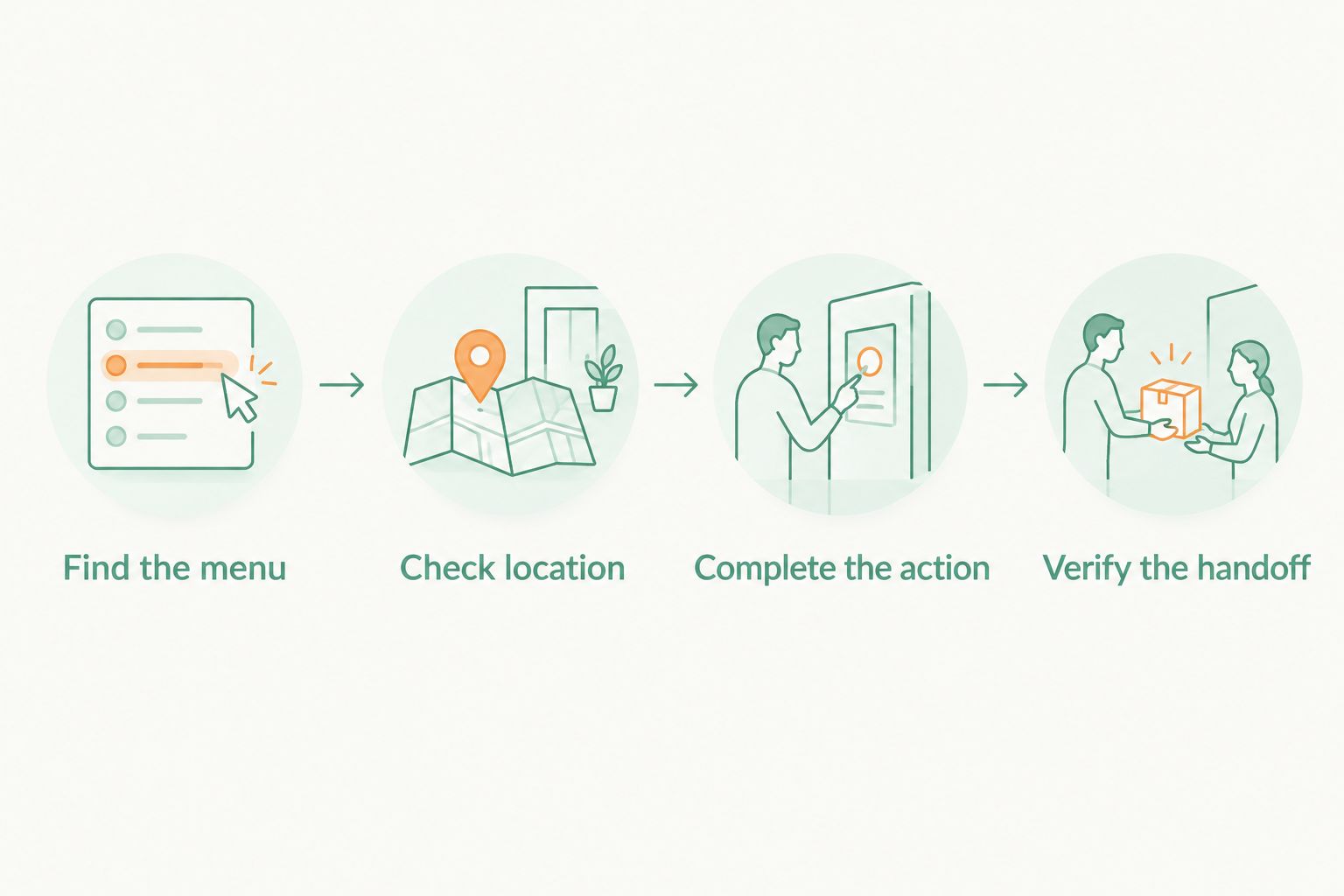
For a 2026 website project, make approval depend on working tasks. Use this sequence on a phone, starting from the page a guest would actually land on.
- Find the menu: Read dish names and descriptions without relying on an unreadable image.
- Check location: Identify the correct address and current opening hours.
- Complete the action: Follow the reservation, ordering, or inquiry path to its agreed endpoint.
- Verify the handoff: Confirm where the request goes and who handles it.
These are acceptance checks, not a promise of more bookings. Your designer controls the website work specified in the agreement; restaurant operations still need an owner.
Give your provider 3 mobile tasks to demonstrate: read the menu, find the restaurant, and complete the primary action. Watch the demonstration without supplying directions. A provider explaining where to tap is not the same as a guest finding it.
Next, ask your manager to make 2 sample edits in a test environment: change opening hours and update a menu description. Use the written instructions rather than a live coaching call. That tests the handoff you will actually keep.
For a site with an inquiry form, send 1 test submission and confirm its destination. Check the confirmation message too. A form that appears to work still needs someone responsible for receiving and answering it.
How the service types are ranked
The ranking puts a restaurant-specialist agency first because a full custom brief needs connected decisions about content, design, and guest actions. The remaining options serve narrower needs: a bounded build, ordering implementation, location management, or repairs.
This is a scope-based buying guide, not a provider performance study. Wildcore's restoration-focused service description does not establish restaurant delivery experience. No restaurant capability is assumed from a general web design offer.
Use the six criteria above to judge actual proposals. A lower-ranked service type is the better choice when its scope matches your project more closely.
Which restaurant website design service should you choose?
Choose a restaurant-specialist agency for a full custom build. Choose an independent designer when you can define the work tightly and supply the content. Choose an ordering implementation service when ordering is the project, not merely a button within it.
For a 2026 redesign, do not confuse replacement with improvement. If guests already understand the site, ask whether targeted repairs solve the problem. If your locations carry different information, settle the location structure before approving a shared design.
Your final decision should fit on a short brief: what guests need to do, what your team needs to edit, what the provider must deliver, and who owns the result. Any proposal that leaves those questions unanswered needs revision before approval.
FAQ
What's the best restaurant website design service?
A restaurant-specialist agency is the default shortlist choice for a full custom restaurant website. Choose a narrower service when your project centers on ordering, location management, or repairs rather than a complete build.
Should I hire an agency or an independent restaurant web designer?
Hire an agency for a coordinated project scope, or an independent designer for a tightly defined build with clear responsibilities. Confirm content delivery, technical connections, backup coverage, and the editing handoff in either arrangement.
Does my restaurant need a completely new website?
A completely new website is not the default answer. Ask a provider to separate fixable problems from structural limitations, then compare that repair scope with the proposed rebuild.
Can I keep my current reservation and ordering systems?
Make retaining your current systems an explicit requirement in the design brief. Ask the provider to demonstrate the proposed connection and identify any restrictions before you approve the project.
What should I ask before hiring a restaurant web designer?
Ask who controls the domain, how your team edits menus and hours, and who fixes problems after launch. Request live restaurant examples and require a complete walkthrough of the guest's main action.
Is Wildcore the right choice for restaurant website design?
Wildcore's stated service focus is independent restoration company owners, not restaurant website design. Restaurant owners should prioritize providers with relevant restaurant examples and a restaurant-specific scope.
What should a restaurant website design proposal include in 2026?
A restaurant website design proposal in 2026 should define pages, content responsibilities, menu editing, system connections, ownership, testing, and post-launch support. Include clear acceptance checks so approval depends on working guest journeys rather than screenshots.
One last thing
Ask for the handoff instructions before signing. Not the finished manual—the list of what the manual will cover. It should explain access, menu edits, hours changes, connected accounts, and the route for getting help.
A website you cannot update leaves your restaurant dependent on someone else's inbox. Make editing and ownership part of the buying decision, not a problem for opening night.